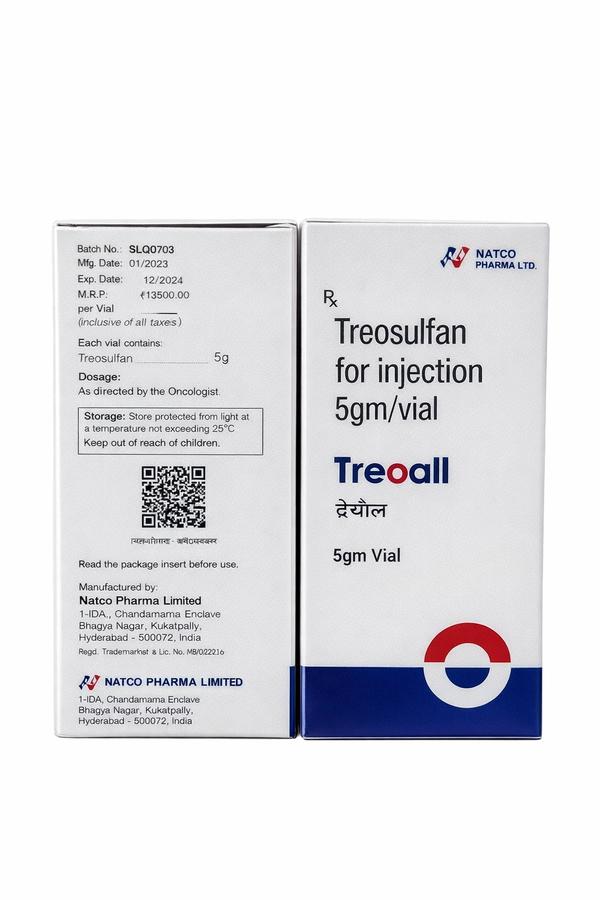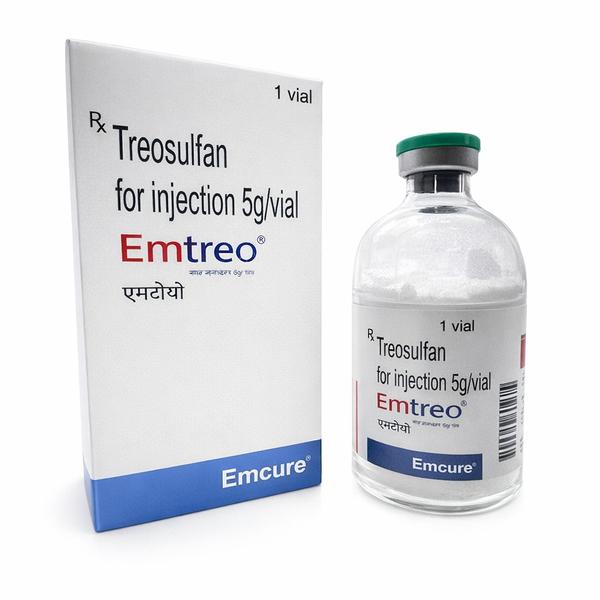
Emtreo 5gm Injection (Treosulfan): The Definitive Global B2B Procurement & Clinical Guide In the advanced field of hematology and oncology, Emtreo 5gm Injection (Treosulfan) has established itself as a cornerstone for conditioning regimens prior to stem cell transplantation. For international pharmaceutical buyers, hospital procurement departments, and oncology wholesalers in the USA, UK, UAE, Australia, Singapore, South Africa, Europe, Middle East, Africa, and Asia, maintaining a consistent, high-quality supply of Treosulfan is essential for patient outcomes. As a leading pharmaceutical exporter from India, Ernest Oncology (a member of the Ernest Pharmaceutical Pvt. Ltd. group) provides specialized global supply chain solutions for Emtreo 5gm. This comprehensive 3000-word authority guide covers every aspect of the drug—from its molecular mechanism to international logistical standards. 1.1 Understanding Emtreo (Treosulfan) Emtreo is the brand name for Treosulfan, a prodrug of a bifunctional alkylating agent. Unlike traditional chemotherapy, Treosulfan is specifically utilized for its “myeloablative“ properties—meaning it effectively clears out the patient's existing bone marrow to prepare for healthy donor stem cells. 1.2 Mechanism of Action: The DNA Cross-Linking Process Treosulfan works through a non-enzymatic conversion into active mono- and diepoxides under physiological pH conditions. These active metabolites act as alkylating agents that: Form DNA Cross-links: The diepoxides create covalent bonds between DNA strands. Inhibit Replication: By physically “locking“ the DNA, the cell can no longer divide or repair itself. Induce Apoptosis: In cancer cells and existing hematopoietic cells, this damage triggers programmed cell death.Therapeutic Indications & Clinical Applications 2.1 Conditioning for Allogeneic Hematopoietic Stem Cell Transplantation (alloHSCT) The primary global use for Emtreo 5gm is as a component of “Reduced Toxicity Conditioning“ (RTC) or “Myeloablative Conditioning“ (MAC) regimens. Adult Populations: Indicated for patients with both malignant (Leukemia, MDS) and non-malignant conditions. Pediatric Populations: Approved for children older than one month with malignant diseases requiring transplantation. 2.2 Treatment of Hematological Malignancies Treosulfan is a key player in treating: Acute Myeloid Leukemia (AML): One of the most common applications for pre-transplant preparation. Myelodysplastic Syndromes (MDS): Providing a path to curative transplant for patients with bone marrow failure. 2.3 Solid Tumor Applications While primarily a transplant drug, Treosulfan has documented efficacy in: Advanced Ovarian Cancer: Specifically used in cases where standard platinum-based therapies have failed. Other Solid Tumors: Investigational and off-label uses include malignant melanoma and certain brain tumors. Part 3: Administration, Dosage, and Preparation Protocols 3.1 Dosage Guidelines Dosage is strictly determined by Body Surface Area (BSA) and the specific conditioning protocol (MAC vs. RTC). Standard Adult Dose: 10 g/m² to 14 g/m² intravenously over 2 hours, typically administered daily for three consecutive days (Days -4, -3, and -2 before the transplant). Pediatric Adjustment: Dosing is precisely calculated based on the child's age and weight to maximize safety. Safety, Precautions, and Monitoring 4.1 Hematological Monitoring (Myelosuppression) As an alkylating agent, Emtreo causes a profound drop in blood counts. This is intentional in the context of a transplant but requires rigorous monitoring for: Neutropenia: High risk of life-threatening infections. Thrombocytopenia: Risk of spontaneous bleeding. Anemia: Leading to severe fatigue and weakness. 4.2 Dermatological Care (The “Treosulfan Rash“) A unique side effect of Treosulfan is its excretion through sweat glands, which can cause skin irritation, particularly in infants and children. Prevention: Frequent diaper changes (every 6–8 hours) and washing sweaty areas (armpits, groin) with water. Advice: Avoid tight clothing and occlusive dressings on the days of infusion. 4.3 Organ Toxicity Considerations Liver Function: Monitoring for “Sinusoidal Obstruction Syndrome“ (SOS), a blockage of small veins in the liver. Ernest Oncology provides all necessary documentation for seamless customs clearance in Singapore, Australia, and Africa: GMP Certification Certificate of Analysis (COA) per batch Certificate of Origin (COO) Standardized Commercial Invoices Renal Function: Caution is advised in patients with pre-existing severe kidney disease. 📞 Order & Inquiry Details [GROUP OF ERNEST PHARMACEUTICAL PVT. LTD] 🌐 Websites www.oncologymediciensupplier.com www.ernestimpex.com www.ernestvision.com 📧 Email exports@ernestpharmaceuticals.com 📦 Business Type Exporter | Bulk Supplier | Distributor 📲 WhatsApp +91 93599 02383 🔗 https://wa.me/919359902383

London, UK
+919405476170
+919405476170
 Chat with us
 Chat with us